
Designing Scoreboards And Displays For Outdoor Sports Venues
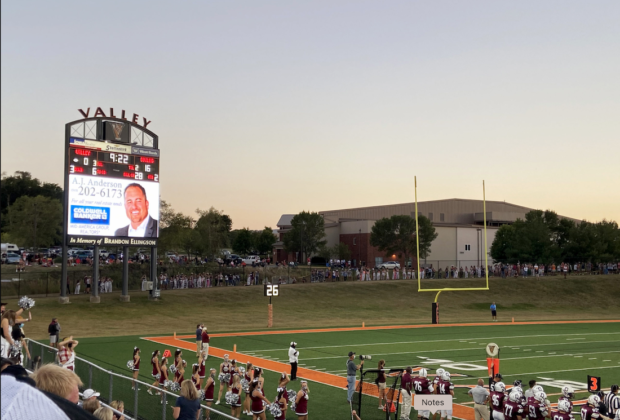
Displays for outdoor venues have their own unique challenges. Sun glare, rain, wind, and constantly moving crowd viewpoints all play a role in readability. We’ve all had the experience of rubbing our eyes while trying to read a screen in the middle of a sunny day game. Visibility is not an afterthought. It impacts the fan experience and the execution of your event every step of the way.
https://www.fair-play.com/project-gallery/
The Sun Is Not Always a Friend
The strongest effect is direct sunlight. Displays that may seem adequate when viewed at night quickly degrade during the day. Conditions that make an already low-resolution screen look muddy at night can render it unreadable at midday. That’s why advertised brightness is typically given in terms of nits when addressing outdoor usage. Displays designed for indoor use will often fall short if you attempt to use them in direct sunlight in an open field or on a rooftop court. Consider only displays that are rated for “full sun” usage, which typically means brightness ratings of multiple thousands of nits. This helps keep scores and statistics readable throughout the day. And since delays influence start times, this is an essential feature.
Color contrast is another factor to keep in mind. Screens with high brightness may still be difficult to read if the color contrast isn’t high enough against blue skies or green turf. High brightness is important for outdoor displays, but screens should also have high contrast so that text and numbers are easy to read.
Distance and Angle Change Everything
Audiences at outdoor venues aren’t packed into neat little blocks of chairs all facing the action. Fans fill bleachers, crowd against fences, and watch from picnic blankets on hillsides. Even venues hosting extreme sports, such as trampoline competitions and freestyle demonstrations, may attract fans surrounding the action from nearly all sides. So a display can’t just be bright enough to see. It must maintain legibility from extreme angles, not just straight-on.
Pixel pitch describes the distance between neighboring pixels and helps determine the appropriate viewing distance. Smaller pixel pitches provide greater detail for spectators close to the screen, while larger pixel pitches can be suitable for displays primarily viewed from farther away. Choosing the wrong pixel pitch can either leave distant viewers paying for detail they can’t perceive or make the image look pixelated to spectators sitting closer to the screen.
Weather Adds Another Layer
Rain, humidity, dust, and temperature extremes all degrade outdoor electronics. Screens must be sealed properly and housed in weather-resistant enclosures to withstand years of exposure without malfunction. A scoreboard that shorts during a rain delay isn’t merely inconvenient. It can delay an entire game and anger anyone awaiting the score.
Temperature is another factor. LED drivers create heat, and if summertime temperatures are added to that mix within an enclosed, poorly ventilated fixture, the LEDs can overheat and dim sooner than expected. Quality outdoor-rated displays are designed with appropriate thermal management to maintain performance under demanding environmental conditions.
Timing Systems Depend on Visibility Too
The score isn’t the only piece of information spectators and players need to know at all times. Timing is another important piece of data. Sports that use shot clocks need those clocks to be easily readable as well. A sport like SlamBall is an extreme variation on basketball mixed with trampoline-enhanced gymnastics that uses a shot clock much like basketball does. Sports with shot clocks and game clocks require their clocks to be just as visible as the scoreboard. When a shot clock can’t be read from the stands or near the edge of the playing surface, players no longer know how much time they have on a possession, and referees are put under unnecessary pressure during arguments.
Real-Time Information Keeps Everyone Engaged
Score and elapsed time aren’t the only things on digital displays nowadays. Games are cluttered with replays, stats, sponsor messages, and graphics designed to excite the crowd. All those elements vie for attention, so thoughtful presentation matters as much as optimal brightness. If there’s clutter fighting for your attention onscreen, a great display will be weakened by bad visibility. Clear hierarchy, legible typography, and spacing allow fans to see what’s going on with minimal thought instead of decoding a cluttered screen mid-play.
Choosing displays for outdoor sports involves consideration of factors such as sunlight readability, viewing angle, weatherization, and how readable a display is as game velocity picks up. Venues that host extreme sports have one additional challenge as spectators tend to view from non-traditional viewing angles. Additionally, fast-paced games require shot clocks and game clocks that are as readable as scoreboards. When luminosity, contrast ratio, pixel pitch, and layout are optimized, spectators remain connected, officials can track game information more easily, and players have the immediate feedback they need. Visibility can make or break the game-day experience.
Author Bio: Thomas Welch is the Marketing Coordinator at Fair-Play Scoreboards, a company that designs and manufactures athletic scoreboards and video displays for sports facilities across the country. With experience in digital marketing and content strategy, he focuses on driving engagement through targeted campaigns, email marketing, and social media. Welch works to strengthen brand presence and support measurable business growth.