
What Outdoor Sport Should a Child Try First?
Ask any parent what they want for their kids, and somewhere near the top of the list is a childhood spent outside rather than glued to a screen. The tricky part is knowing where to start. Some sports need expensive gear, some need years of lessons before they get fun, and some are just a little too intimidating for a seven-year-old on their first try.
The good news is that plenty of outdoor sports sit at the friendlier end of the scale. They are simple enough to pick up in an afternoon, flexible enough to grow with a child, and fun enough that kids actually ask to do them again. This guide walks through a handful of them, what each one involves, and why it tends to work so well for younger learners.
Why Kids Love Outdoor Sports
More than most adults remember. An outdoor sport gives kids fresh air and exercise, sure, but it also gives them small wins they can feel in their own bodies: balancing on a bike for the first time, swimming a full length of the pool, reaching the top of a trail. Those moments build confidence in a way that is hard to replicate indoors.
Add in the social side, with siblings, friends, or a whole family doing something together, and it is easy to see why outdoor activities tend to stick with kids long after the first lesson.
Why Start With the Easy Ones?
It does, and mostly because of how kids handle frustration. A sport with a steep learning curve can turn a fun Saturday into tears pretty quickly. Easier sports give children early success, which keeps them motivated to try the harder stuff later. They also tend to need less gear, less travel, and less money, which takes the pressure off parents too. And many of these “easy” sports are the foundation for bigger adventures down the road, so time spent on them is never wasted.
Sports That Teach Kids to Trust Themselves in the Water
Before a child can enjoy being outdoors, they need to feel safe there. Water is where that lesson often starts, because it is the one environment where confidence and safety are almost the same thing. The two sports in this group look very different in scale, but one leads naturally into the other.
Swimming
Swimming is usually the first water skill most children learn, and for good reason. Lessons often start in shallow pools with floats, games, and plenty of splashing before moving on to proper strokes. Most kids can get comfortable in the water within a few weeks of regular practice.
Beyond being a full-body workout, swimming is a safety skill. A child who can swim confidently has a much easier time with almost every other water-based activity on this list. It is also gentle on growing joints and can be practiced year-round in many places, which makes it one of the most practical places to begin.
Scuba Diving
Fun diving is the relaxed side of scuba: guided dives done purely for enjoyment, with no lessons or tests attached. It sounds like a big jump from the swimming pool, but kids can get there sooner than most parents expect. Under PADI standards, for example, children can begin with pool-based programs from age eight and can take the Junior Open Water Diver course from age ten, with depth limits that increase gradually as they get older.
After that first certification, the learning part is over and the playing part begins. Most kids love going fun diving with their family or friends, pointing out fish to each other and arguing afterward over who spotted the turtle first. These dives usually happen over shallow, calm reefs with a parent or a dive professional close by, so it stays relaxed for everyone.
Sports for Kids Who Like to Keep Moving
Once kids trust their own bodies, the next thing they usually want is to go somewhere with them. That urge shows up early, and it is worth encouraging. The two sports below both let a child move under their own steam, one on land and one on the water, with a parent close by but not doing the work for them.
Cycling
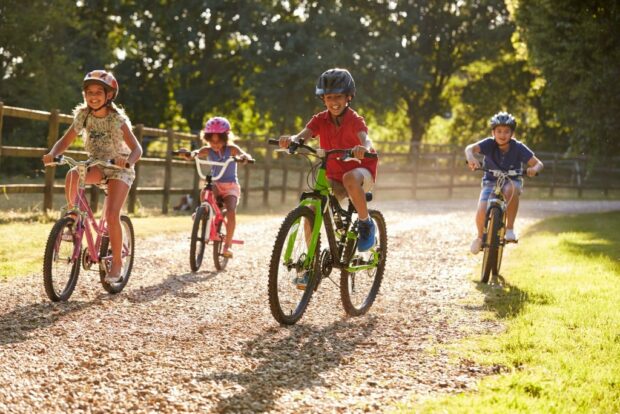
These days, a lot of kids start on balance bikes, which have no pedals and let them push along with their feet. Once balance clicks, moving to a pedal bike often takes just a few tries. Parks, quiet streets, and dedicated bike paths make good practice spots.
Cycling builds balance, coordination, and leg strength, but its biggest perk might be freedom. Kids love the feeling of getting somewhere under their own power. It is also an activity the whole family can do together, from a short loop around the neighborhood to longer weekend rides once everyone is ready.
Sports for Kids Who Love Nature
Not every child cares about going fast or going far. Some just want to look at things, and that is a perfectly good reason to be outside. The last two sports barely feel like sports at all to the kids doing them, which is exactly why they work.
Hiking
For kids, hiking does not need to mean mountains. A flat nature trail, a forest walk, or a short coastal path all count. The key is choosing a route that matches their legs and attention span, ideally with something interesting along the way, like a stream, a viewpoint, or a spot to look for bugs.
Because it turns into exploring. Kids get to notice birds, rocks, plants, and animal tracks, which keeps the walk feeling like a game rather than exercise. Hiking also needs very little equipment, just comfortable shoes, water, and snacks, so it is one of the easiest outdoor sports to try without much planning.
Kayaking
Kayaking means paddling a small boat across calm water, such as a lake, a slow river, or a sheltered bay. Younger kids usually start in a tandem kayak with an adult, while older ones can move into their own single kayak once they are comfortable.
Calm-water kayaking is stable, relaxing, and surprisingly easy to pick up. It teaches kids teamwork when paddling with a parent, builds upper-body strength, and gets them close to wildlife like fish, birds, and even turtles in the right spots. With a properly fitted life jacket, it is one of the more relaxed ways to introduce kids to life on the water.
Snorkeling
Snorkeling is simply floating face-down at the surface with a mask, snorkel, and fins, watching what is happening underneath. There is no deep diving required, and most kids can get the hang of breathing through a snorkel after a few minutes of practice in shallow water.
It turns swimming into an adventure. Suddenly the water is full of colorful fish, coral, and the odd starfish, which is usually enough to keep kids in the water for hours. Snorkeling also helps them get comfortable breathing with gear and seeing the world underwater, which makes it a gentle option for kids who are not quite ready to dive yet.
Frequently Asked Questions
What is the easiest outdoor sport for young kids to start with?
Hiking and swimming are often the easiest starting points, since they need little equipment and can be adjusted to almost any age or fitness level.
At what age can kids start scuba diving?
It depends on the program. Many agencies offer pool-based experiences from around age eight, with junior certification courses usually starting at ten.
Do kids need special gear for these outdoor sports?
Most need only the basics, like a helmet for cycling, a life jacket for kayaking, or a properly fitted mask for snorkeling. Gear can usually be rented while kids are still learning.
How can parents keep outdoor sports safe for children?
Choosing age-appropriate activities, using proper safety gear, and learning with qualified instructors in calm conditions go a long way toward keeping things safe and fun.
Conclusion
Getting kids outdoors does not need to be complicated. Swimming builds the water confidence that everything else rests on, and fun diving shows how far that confidence can go. Cycling and kayaking give kids the thrill of moving under their own power, while hiking and snorkeling suit the ones who would rather stop and look at things. Each of these sports is easy to start, needs little gear, and can grow with a child.
There is no wrong place to begin, and many kids end up trying several before finding a favorite. Early wins build confidence, and confidence opens the door to bigger adventures later. For one family that might mean cycling the flat canal paths of the Netherlands, for another a hike through New Zealand’s national parks or a trip to swim with mantas in Komodo Island in Indonesia, and for others simply a paddle across a quiet lake in Canada. What matters most is keeping it fun, because a child who enjoys being outside will keep going back.